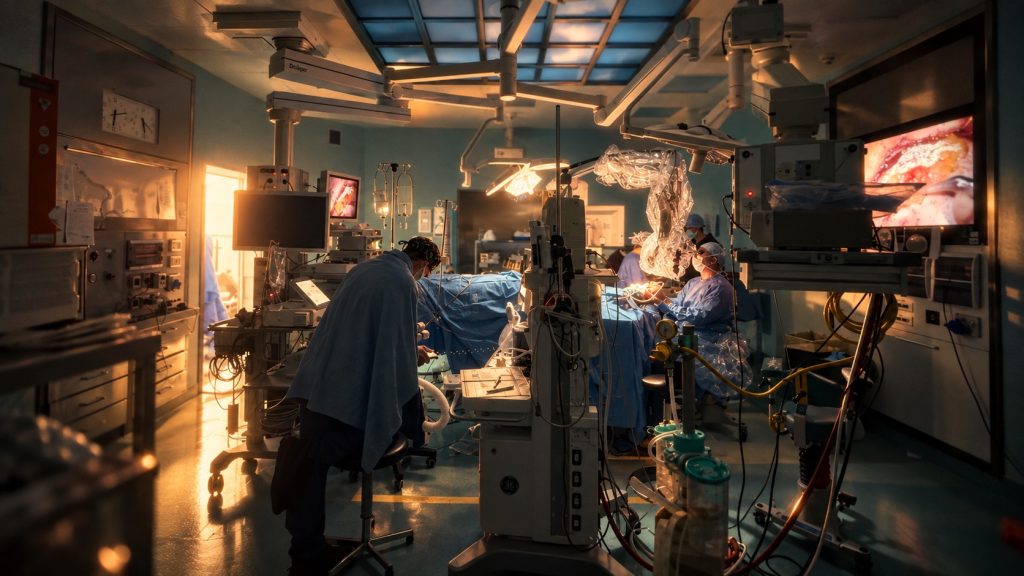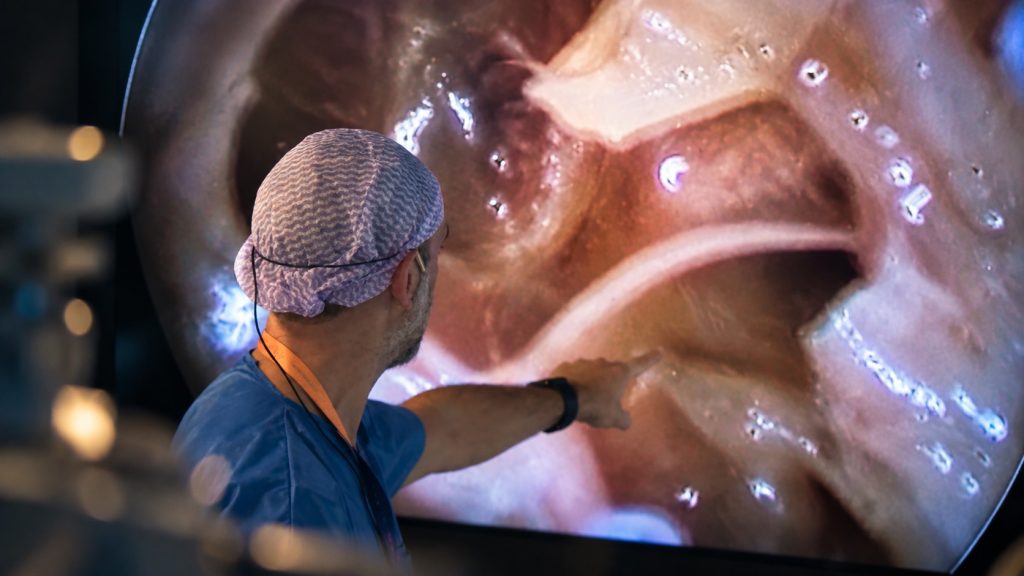
The Unit routinely performs the following procedures, applying every technique from minimally invasive endoscopic and robotic surgery to microscopic, exoscopic and open approaches, according to the disease and its stage.
Ear and lateral skull base
Vestibular schwannoma (acoustic neuroma) and lateral skull base tumours
The Unit is at the forefront of treatment of complex pathologies of the lateral skull base and cerebellopontine angle, including petrous bone cholesteatoma, temporal paraganglioma, meningoencephalocele, chondrosarcoma and cholesterol granuloma. The multidisciplinary team uses endoscopic, microscopic and exoscopic techniques.
Middle and inner ear surgery
Treatment of otosclerosis, cholesteatoma, chronic otitis media, Ménière’s disease and conditions of the inner ear and auditory canal, using innovative minimally invasive endoscopic techniques for which the Unit is internationally recognised.
Deafness surgery
Cochlear implants, bone-anchored implants and treatment of malformations (cochlear aplasia, inner ear malformation, cochlear nerve hypoplasia and agenesis), from combined endoscopic approaches to the cochlea to auditory brainstem implants, which restore hearing even when the auditory nerve is absent.
Facial nerve surgery
Removal of facial nerve tumours with nerve reconstruction, and surgical rehabilitation of facial paralysis, from recent dynamic reinnervation techniques to static procedures.
Malignant tumours of the temporal bone and external auditory canal
Lateral and subtotal temporal bone resections.
Vascular masses of the neck and skull base
Treatment of tympanojugular and carotid paragangliomas through modular approaches, including pre-operative embolisation and carotid assessment (balloon occlusion test, carotid stenting).
Nose, sinuses and anterior skull base
Benign and malignant nasosinus tumours
Exclusively endoscopic approaches, alone or combined with external access, allow minimally invasive treatment of tumours at the border between the brain and the nasal cavity. They achieve optimal oncological radicality and avoid traditional craniotomy.
Anterior skull base surgery
Advanced transnasal endoscopic surgery for tumours of the pituitary gland, infratemporal fossa and pterygopalatine fossa (such as juvenile nasopharyngeal angiofibroma, esthesioneuroblastoma and mucosal melanoma), disease of the clivus and nasopharynx, and defects of the anterior skull base (cerebrospinal fluid fistula, meningoencephalocele).
Inflammatory sinus surgery
Minimally invasive endoscopic treatment of nasal polyps and chronic sinusitis, extending to frontal disease and fronto-orbital mucoceles using endoscopic Draf techniques and open frontal exclusion.
Lacrimal duct surgery
Endoscopic dacryocystorhinostomy, mainly for nasolacrimal duct stenosis.
Larynx, trachea and voice
Malignant laryngeal tumours
Modular treatment according to stage: minimally invasive laser surgery for early vocal cord and laryngeal tumours, open partial laryngectomy with reconstruction of voice and swallowing, and total laryngectomy. Voice and swallowing outcomes are further improved with minimally invasive phonosurgery (Vox-Implant® and hyaluronic acid).
Phonosurgery
Microsurgery of the vocal cords for rehabilitation of voice function.
Tracheal surgery
In collaboration with the Respiratory Diseases Department, multidisciplinary treatment of tracheal tumours and stenosis, from endoscopic dilation, stenting and laser resection to open resection with tracheal anastomosis.
Malignant tumours of the neck, oropharynx and oral cavity
Robotic minimally invasive surgery for early disease, and removal of advanced tumours with microvascular flap reconstruction that restores swallowing and gives a good cosmetic result.
Tumours of the salivary glands and parapharyngeal space
Submandibular sialadenectomy, superficial and total parotidectomy with facial nerve monitoring, with or without neck dissection. Treatment also covers deep lobe parotid tumours, vagus nerve schwannomas, and malignant tumours of the parapharyngeal and infratemporal spaces.
Thyroid oncology
Treatment of advanced malignant thyroid tumours, with management of neck metastases and recurrence.
Multidisciplinary Care
The Unit coordinates the multidisciplinary outpatient clinic of the Diagnostic Therapeutic Assistance Pathway (PDTA) for the diagnosis and treatment of head and neck cancer. The clinic is held once a week and includes first and follow-up visits. Each session is preceded by a joint meeting of all Operating Units affiliated with the PDTA, where cases are discussed in advance.
The Modena multidisciplinary oncology team manages malignant diseases of the head and neck, from the first visit to follow-up. It brings together otorhinolaryngology, oncology, radiotherapy, maxillofacial surgery, pathology, radiology, plastic surgery, nutrition, psychology, dentistry and digestive endoscopy.
Audiology and Phoniatrics Service
The Audiology and Phoniatrics Service specialises in the diagnosis, treatment and rehabilitation of major hearing, voice and balance disorders.
Childhood deafness
Diagnosis and rehabilitation, including otoacoustic emissions, automatic auditory evoked potentials and threshold testing, behavioural, pure-tone and speech audiometry, and impedance testing.
Neonatal screening
Coordination of provincial screening and regular follow-up of children with deafness at the Regional Hearing Impairment Table (TADU) in the various districts.
Cochlear Implant and Implantable Prosthetics Program
Selection, surgery, activation and follow-up of children, adults and older patients with different types of deafness.
Sudden hearing loss program
Day hospital management, with infusion therapy, biochemical tests and instrumental testing.
Voice and swallowing disorders
Diagnosis and rehabilitation, with particular attention to patients after laryngotracheal cancer surgery.
Vestibular disorders
Diagnosis and rehabilitation through targeted tests (caloric tests, video-oculonystagmography, cervical and ocular VEMPs).